
The truth is out there.
And no, this isn’t some kind of Mulder and Scully kind of thing.
The truth of how you can move from where you are in your career or business to where you want to go in your career is out there.
Want to become a nationally-known subject expert so you can land high profile projects?
The truth of how to get there is out there.
Always wanted to teach alongside your regular work?
The truth of how to get started is out there.
Want to move from small residential clients to creative arts-based clients?
The truth of how to do it is out there.
The information, the how to, the next steps — it’s all out there.
And designers and creatives actually have the perfect tool to unlock that information. You just may not have used it yet.
Ever heard of precedent research?
Designers use precedent research all the time. Let’s say you’re designing a shade structure. One of your first steps might be to collect precedents — other examples of shade structures you like.
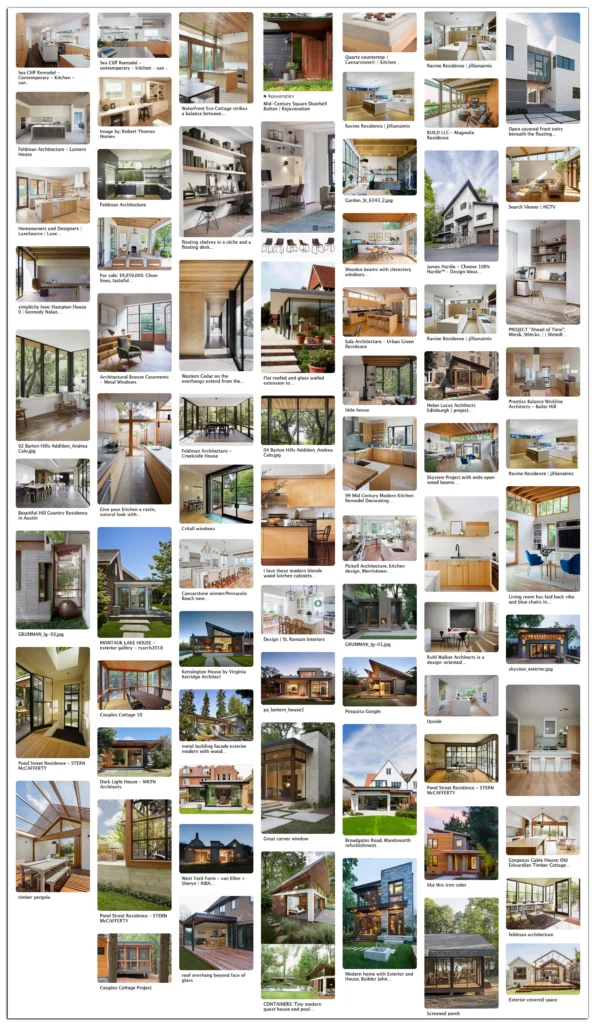
The collection of other options does a couple of things for you.
It helps you think systematically about the item you’re designing and spot patterns.
Seeing a whole collection helps you get a sense of the ‘common elements’ of the item you mean to design. ‘Ok, we’ll need to think about material, the structure, how closed or open we want it to be.’ Seeing a couple variations upon the pattern helps you understand some of the core patterns or rules that make up all or most shade structures.
It gives you examples for deeper study and analysis.
You may find that you’re most drawn to shade structures that have beautiful, elaborate patterning, but you know that you’ll need to design something that can be created modularly. You may pull one or two examples that do this well out of your collection to study more deeply — to trace, break down and make sense of — to understand their pattern and how they make a repeatable unit that looks more complex than it is.
It hits you straight in your subconscious… And spurs flashes of creative insight.
We process images thousands of times faster than words, and our subconscious mind — which plays a big role in processing imagery — is super powerful creatively.
I’ve seen this happen in my design skills: I spent a summer tracing over one of my favorite landscape architects’ curvy and exuberant design drawings. A few months later, in one of my design studios, I created the first project I can remember with curves — and my favorite design project I created in my entire time at Harvard Design School.
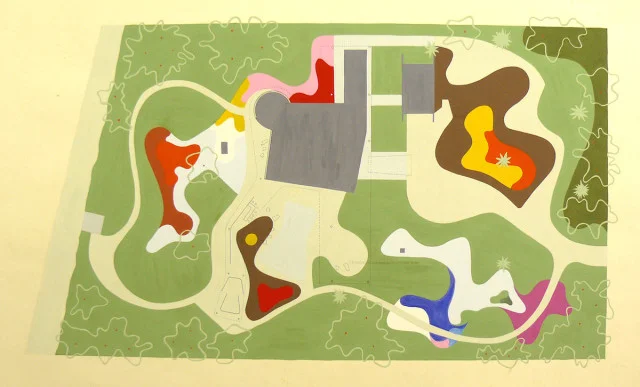

Left: Roberto Burle Marx’s High-Speed Garden | Right: My Walden project for Harvard Design School
By closely observing, even tracing over those drawings, I was able to internalize the design logic of his work and to build a ‘body memory’ that guided my work. And I believe this happens whether it’s a design or your career.
Precedent Research for Your Career
Ok, so you know how to use precedent research for a building or boulevard. But how do you actually use it for your career?
There’s a tool I give women in my Next Level program… Visual Case Studies. It’s a step I assign women who participate in my Next Level program— my coaching program for midcareer women looking for a clearer and more ambitious direction for their career or business.
And because I’m a big believer in showing not telling, I decided to do a visual case study myself and share it with you.
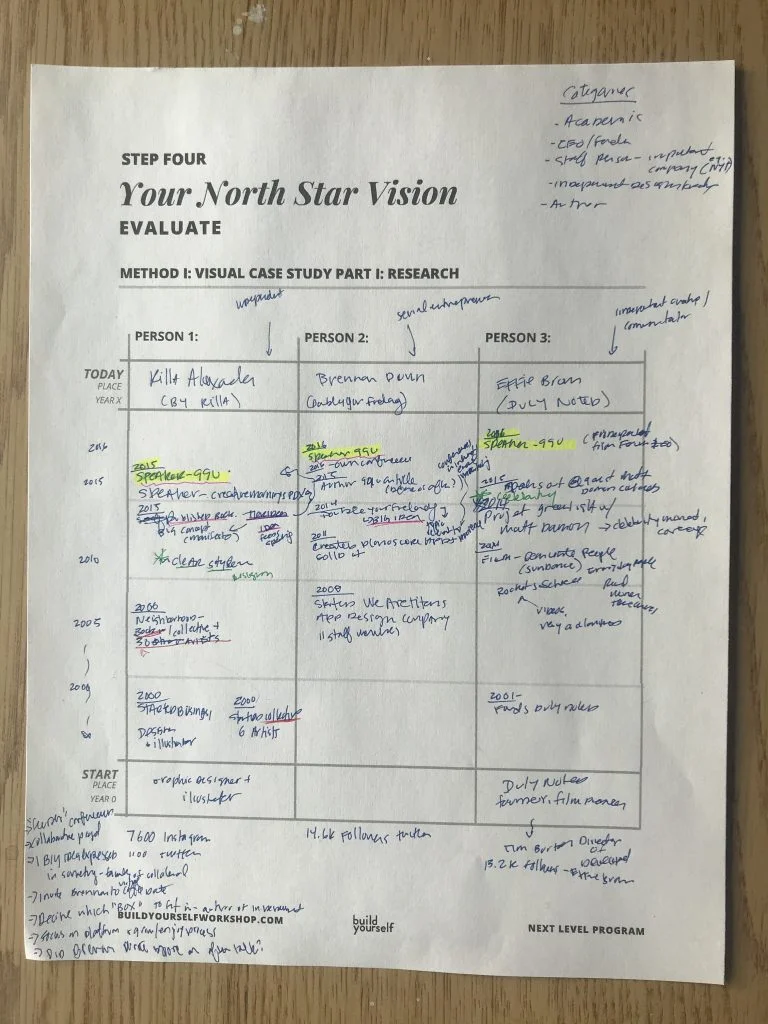
Here’s what I did to make mine:
1. I pick 2–3 people to do case studies of.
One of my business goals is to speak at a design conference like Adobe’s 99U conference. So I decided to take three speakers at previous conferences of theirs and run visual case studies on them. I don’t overthink who I’m choosing. I figure that there’s some luck of the draw involved and that *even if I don’t pick the perfect people ever* (that’s my perfectionism speaking) and I will learn what I need to know.
2. I look at their LinkedIn, their bios, read an article or two about them, and list out and date key milestones.
I keep notes on what I’m curious about in the margins — how did he sell that company? Do you need to have served Fortune 500 clients?
3. I chart them all on the same time axis, side-by-side and highlight any common patterns.
As I’m doing this, I’ll often notice factors I didn’t see otherwise… Wait, so it looks like there’s a reputation-building event which was a celebrity moment for this person, and it looks like this person’s journey was conferences.
4. I note my further questions and takeaways.
I like to think to myself — if I had to give a report of 3–5 bullet point takeaways from this exercise to someone else, what would rise to the top? And what are the questions it’s left me with? How could I get them answered?
So here were my takeaways from my visual case study:
- There are five common speaker ‘types’ I can see: Academic, CEO/Founder of a big name company, staff person of a big name company, independent designer with a clear point of view and author/idea generator (sometimes nonprofit founders can fit into this box). I probably would fit into one of the last two categories — which means that I’d need to…
- I should decide which ‘box’ I think I’d like to fit in. But for both I’d need to…
- Have one clear idea I’m associated with (and have a universe of ‘content’ like product offerings, a creative collaborative project, other conference talks) on this one clear idea.
- I should highlight the ‘blue chip’ or ‘big name’ clients I’ve worked with more often.
- A few tactics or strategies I might pursue: A collaborative project that captures interest and is connected to my ‘big idea.’ Speaking at ‘feeder’ conferences on the big idea. (Having a publicized interaction with a celebrity is a path but seems less likely for me. ;-) )
- All speakers have at least one social platform in which they’re very well known. While it’s a long road to build those kinds of numbers, I’ve been avoiding social media except for LinkedIn, and I probably should try reengaging soon.
There are also really specific questions that come out of doing this analysis. And it’s much easier to know how to get a specific question answered than to get a vague one answered.
A few of mine:
- What is the process for getting selected? Nominations?
- Are there common social networks or groups that people are in?
- How many of the speakers are independent entrepreneurs and are there any common factors between them?
- Brennan Dunn has written for 99U around the time he spoke. Did he start writing for them first? Or after his talk?
Then there’s some creative inspirations that just happen as I’m doing the research.
- I’d love to do a multi-creative effort like Rilla Alexander’s Neighbourhood book. Could I plan one in the next few months?
- This is a good frame for my work with my positioning coach: What would my creative conference talk topic (and the universe of collateral around it) be?
- Brennan Dunn seems really cool. And I like how he uses his social media to genuinely interact with people. I’d like to observe that a little more closely, and maybe I should invite him to a virtual coffee date!
- Effie Brown is an amazing precedent for a client of mine in terms of the way she focuses on real social issues and uses humor.
And finally, even though the research has sobered me some — I feel very small potatoes compared to these people — I do believe that the information in these case studies will guide me.
When I go to the 99U conference later this year, I’ll have a sense of the more specific questions I’m trying to answer. It’ll help me pay closer attention to what I observe there — guide me in asking better questions and noticing more.
It is also ‘in me’ in a deeper sense. It lives in my subconscious and will guide me as I make choices — even those seemingly unrelated to this. I’ll be at an event and will get into a conversation with someone that will open up an opportunity related to this path, and it will seem ‘magic’ but it will be guided by the fact that I now have opened up a psychological mechanism to ‘look out for’ this opportunity and some of the specific opportunities or strategies outlined above. I may even run into a celebrity. ;-)
Want to receive more tips and ideas for getting where you want to go in your career? Sign up for my email newsletter by clicking here.


